What Current Research Shows
Retatrutide has emerged as one of the most promising investigational therapies for obesity and metabolic disease. Unlike earlier incretin-based medications, Retatrutide is the first triple hormone receptor agonist designed to simultaneously activate the glucagon-like peptide-1 (GLP-1), glucose-dependent insulinotropic polypeptide (GIP), and glucagon receptors. By targeting three complementary metabolic pathways, the drug aims to reduce appetite, increase energy expenditure, improve insulin sensitivity, and promote substantial weight loss beyond what has been observed with previous GLP-1 receptor agonists.
In a landmark Phase 2 clinical trial published in the New England Journal of Medicine, participants receiving the highest dose of Retatrutide achieved an average weight reduction of 24.2% after 48 weeks, representing one of the largest weight-loss effects reported for an anti-obesity medication to date.
The growing interest in Retatrutide extends beyond obesity treatment because excess body weight is now recognized as a major contributor to cancer development. According to extensive epidemiological research, obesity is associated with an increased risk of at least 13 different types of cancer, including colorectal, pancreatic, liver, kidney, endometrial, esophageal adenocarcinoma, and postmenopausal breast cancer.
Rather than acting through a single mechanism, obesity creates a biological environment that promotes tumor development through chronic low-grade inflammation, insulin resistance, elevated circulating insulin and insulin-like growth factor-1 (IGF-1), hormonal imbalances, oxidative stress, and dysfunction of the immune system. These metabolic disturbances can stimulate abnormal cell proliferation while reducing the body’s ability to identify and eliminate potentially cancerous cells.
Table of Contents
What Is Retatrutide?
Retatrutide is an investigational once-weekly injectable peptide drug developed for the treatment of obesity and metabolic disease. It belongs to a new class of therapies known as triple receptor agonists, meaning it simultaneously activates three key metabolic hormone pathways: GLP-1 (glucagon-like peptide-1), GIP (glucose-dependent insulinotropic polypeptide), and glucagon receptors. This multi-target mechanism distinguishes it from earlier drugs such as semaglutide and tirzepatide, which act on one or two of these pathways.
Triple Agonist Mechanism
Retatrutide’s therapeutic effects are based on coordinated activation of three receptors:
1. GLP-1 receptor activation
- Reduces appetite and food intake
- Slows gastric emptying
- Enhances satiety signaling in the brain
- Improves glucose-dependent insulin secretion
2. GIP receptor activation
- Enhances insulin secretion in response to meals
- Improves lipid metabolism
- May improve adipose tissue function
3. Glucagon receptor activation
- Increases energy expenditure (thermogenesis)
- Promotes fat oxidation in the liver
- Contributes to sustained weight reduction
Together, these pathways produce a dual effect of reduced caloric intake and increased energy expenditure, which is a key reason for the magnitude of weight loss observed in clinical studies.
Metabolic Effects
Retatrutide influences several major physiological systems:
- Appetite regulation: Strong suppression of hunger signals via central nervous system GLP-1 pathways
- Increased energy expenditure: Glucagon receptor activation increases metabolic rate
- Fat reduction: Significant decreases in visceral and hepatic fat stores
- Glycemic control: Improved insulin sensitivity and lower blood glucose levels
These combined effects explain why Retatrutide is being studied not only for obesity, but also for conditions such as type 2 diabetes and fatty liver disease.
Clinical Evidence: Weight Loss Outcomes
The most widely cited data come from a Phase 2 randomized clinical trial published in the New England Journal of Medicine (2023), which evaluated multiple dose levels over 48 weeks.
Key findings:
- Up to 24.2% mean body weight reduction at the highest dose
- Progressive weight loss throughout treatment (no clear plateau at 48 weeks)
- Clinically meaningful improvements in cardiometabolic markers
Comparison of Anti-Obesity Therapies
| Drug | GLP-1 | GIP | Glucagon | Average Weight Loss |
|---|---|---|---|---|
| Semaglutide | ✓ | — | — | ~15% |
| Tirzepatide | ✓ | ✓ | — | ~21% |
| Retatrutide | ✓ | ✓ | ✓ | Up to 24.2% (Phase 2) |
*Source: New England Journal of Medicine Phase 2 Trial (2023) *
Why Retatrutide Is Considered a “Next-Generation” Therapy
Retatrutide is considered a next-generation metabolic drug because it extends beyond appetite suppression alone. By adding glucagon receptor activity, it introduces a mechanism that actively increases energy expenditure, which is not a dominant feature of earlier GLP-1–based therapies.
This combination of:
- appetite suppression (GLP-1),
- insulin modulation (GIP),
- and metabolic acceleration (glucagon),
creates a multi-pathway metabolic reset effect, which is currently under investigation for its broader implications in obesity-related diseases, including potential cancer risk reduction through metabolic normalization.
Why Obesity Greatly Increases Cancer Risk
Obesity is now recognized as one of the most significant modifiable risk factors for cancer development. Rather than acting through a single pathway, excess body fat influences multiple biological systems simultaneously, creating an internal environment that can promote tumor initiation, growth, and progression. Large-scale epidemiological analyses from organizations such as the American Cancer Society and the National Cancer Institute (NCI) consistently show strong associations between elevated body weight and increased cancer incidence across multiple cancer types.
Key Biological Mechanisms Linking Obesity and Cancer
1. Chronic inflammation
Excess adipose tissue—especially visceral fat—acts as an active endocrine organ that releases inflammatory cytokines such as:
- Interleukin-6 (IL-6)
- Tumor necrosis factor-alpha (TNF-α)
- C-reactive protein (CRP)
This leads to chronic low-grade systemic inflammation, which can:
- Damage DNA over time
- Promote cellular mutation accumulation
- Support tumor growth and survival signaling
2. Hyperinsulinemia
Obesity is strongly associated with insulin resistance, which causes chronically elevated insulin levels in the blood.
High insulin levels:
- Stimulate cell proliferation
- Reduce apoptosis (programmed cell death)
- Enhance nutrient availability for tumor cells
This creates a metabolic environment that favors cancer cell survival and expansion.
3. Elevated IGF-1 signaling
Insulin resistance also increases levels of insulin-like growth factor 1 (IGF-1), a potent growth-promoting hormone.
IGF-1:
- Activates PI3K/Akt and MAPK signaling pathways
- Promotes uncontrolled cell division
- Inhibits normal cellular repair mechanisms
These pathways are frequently overactive in many human cancers.
4. Visceral fat accumulation
Unlike subcutaneous fat, visceral fat (abdominal fat around organs) is highly metabolically active.
It contributes to cancer risk by:
- Producing inflammatory cytokines
- Increasing insulin resistance
- Altering hormone metabolism
- Increasing free fatty acid release into circulation
Visceral fat is considered more strongly linked to cancer risk than total body fat alone.
5. Adipokine imbalance
Fat tissue secretes signaling molecules known as adipokines, including leptin and adiponectin.
In obesity:
- Leptin levels increase → promotes cell proliferation and angiogenesis
- Adiponectin levels decrease → removes anti-inflammatory and anti-tumor effects
This imbalance shifts the body toward a pro-growth, pro-inflammatory state.
6. Oxidative stress
Obesity is associated with increased production of reactive oxygen species (ROS), leading to oxidative stress.
Consequences include:
- DNA damage
- Genomic instability
- Impaired DNA repair mechanisms
These processes increase the likelihood of cancer-causing mutations.
7. Immune dysfunction
Obesity impairs immune surveillance, particularly:
- Reduced cytotoxic T-cell activity
- Dysfunctional natural killer (NK) cells
- Altered macrophage polarization
As a result, the immune system becomes less efficient at identifying and eliminating abnormal or precancerous cells.
Cancers Strongly Associated With Obesity
According to the National Cancer Institute and American Cancer Society, obesity is associated with increased risk of at least 13 types of cancer, including:
- Colorectal cancer
- Postmenopausal breast cancer
- Pancreatic cancer
- Liver cancer
- Kidney (renal cell) cancer
- Endometrial cancer
- Ovarian cancer
- Esophageal adenocarcinoma
- Gallbladder cancer
- Gastric (cardia) cancer
- Thyroid cancer
- Multiple myeloma
- Meningioma
Key Statistics
Large population studies estimate that:
- ~40% of cancers in the United States are associated with overweight or obesity, according to analyses cited by major public health organizations.
- Obesity is consistently ranked among the leading preventable risk factors for cancer, alongside smoking and alcohol consumption.
- Individuals with severe obesity may have significantly higher risk (often 1.5× to 3×) for certain cancers compared with individuals in a healthy weight range, depending on cancer type.
Public Health Perspective
The American Cancer Society and National Cancer Institute emphasize that excess body fat is not only a metabolic condition but also a systemic driver of cancer biology. Unlike many risk factors, obesity influences multiple carcinogenic pathways at once—hormonal, inflammatory, metabolic, and immune—making its overall impact particularly significant.
Importantly, obesity is considered one of the most modifiable cancer risk factors, meaning that weight reduction and metabolic improvement may substantially reduce long-term cancer risk across multiple organ systems.
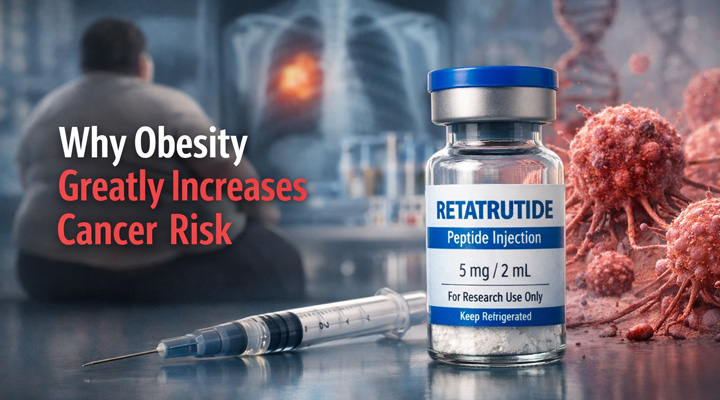
How Retatrutide peptide May Help Fight Cancer
Retatrutide is not an approved cancer therapy, but its broad metabolic effects have led researchers to investigate whether it may indirectly influence cancer risk and tumor biology. The current scientific hypothesis is that Retatrutide could act through multiple interconnected biological pathways, many of which are already known to play central roles in obesity-associated cancer development. These pathways include weight loss–driven hormonal changes, inflammation reduction, improved insulin signaling, immune system modulation, and potential direct effects on the tumor microenvironment.
1. Dramatic Weight Loss
One of the most significant and well-documented effects of Retatrutide is substantial body weight reduction. In a Phase 2 randomized clinical trial published in the New England Journal of Medicine, participants receiving the highest dose experienced up to 24.2% reduction in body weight over 48 weeks, with weight loss continuing steadily throughout the study period and no clear plateau observed at week 48.
This sustained and pronounced weight loss is clinically important because adiposity—particularly visceral fat—is strongly linked to cancer-promoting biological processes.
Why fat loss reduces cancer risk factors
Weight reduction influences several key mechanisms:
- Inflammatory cytokines: Decreases IL-6, TNF-α, and other pro-inflammatory signaling molecules produced by adipose tissue
- Estrogen production: Reduces aromatase activity in fat tissue, lowering estrogen levels relevant to hormone-sensitive cancers
- Insulin resistance: Improves glucose metabolism and reduces chronic hyperinsulinemia
- Cancer-promoting metabolic signaling: Downregulates growth-related pathways such as PI3K/Akt and mTOR signaling
Together, these changes shift the body away from a chronic pro-growth, pro-inflammatory state associated with tumor development.
Suggested figure: Weight loss comparison
Figure Title: Comparative Weight Loss Across Anti-Obesity Therapies
Structure:
- X-axis: Time (0–48 weeks)
- Y-axis: Percentage body weight reduction
- Curves:
- Semaglutide (~15% plateau)
- Tirzepatide (~21% plateau)
- Retatrutide (~24.2%, sustained upward trajectory)
Caption:
“Phase 2 data (NEJM, 2023) demonstrate that Retatrutide produces greater and more sustained weight loss compared with earlier incretin-based therapies.”
2. Reduction of Chronic Inflammation
Chronic low-grade inflammation is a hallmark of obesity and a major driver of cancer initiation and progression. Retatrutide-induced metabolic improvement and fat loss may reduce systemic inflammatory activity through several mechanisms.
Key inflammatory markers affected include:
- Interleukin-6 (IL-6)
- Tumor necrosis factor-alpha (TNF-α)
- C-reactive protein (CRP)
- Macrophage activation in adipose tissue
In obesity, enlarged adipocytes recruit immune cells—especially pro-inflammatory macrophages—into adipose tissue, creating a sustained inflammatory environment. This state promotes DNA damage, cellular stress, and tumor-supportive signaling.
By reducing adipose tissue mass and improving metabolic health, Retatrutide may help:
- Decrease macrophage infiltration into fat tissue
- Lower systemic inflammatory cytokine levels
- Reduce oxidative stress linked to DNA damage
Lower chronic inflammation is associated with reduced biological conditions that support tumor initiation and progression.
3. Improved Insulin Sensitivity
Obesity is strongly associated with insulin resistance and hyperinsulinemia, both of which are linked to increased cancer risk. Retatrutide improves glucose regulation, which may reduce these cancer-promoting metabolic signals.
Key mechanisms include:
- Hyperinsulinemia reduction: Lower circulating insulin decreases proliferative signaling
- IGF-1 signaling modulation: Reduced insulin levels lead to decreased IGF-1 activity
- PI3K/Akt pathway downregulation: A major growth and survival pathway often overactivated in cancer
- Tumor proliferation reduction: Lower metabolic signaling reduces cellular replication pressure
Since insulin and IGF-1 act as growth-promoting hormones, improving insulin sensitivity may reduce systemic conditions that support tumor cell survival and expansion.
4. Better Immune Function
Obesity is associated with significant immune dysregulation, which can impair the body’s ability to detect and eliminate abnormal cells. Retatrutide’s metabolic effects may indirectly improve immune surveillance by reversing obesity-related immune dysfunction.
Observed dysfunctions in obesity include:
- Exhausted T cells: Reduced anti-tumor immune response capacity
- Altered macrophage polarization: Shift toward pro-inflammatory but less effective immune states
- Impaired natural killer (NK) cells: Reduced ability to eliminate transformed cells
By improving metabolic balance and reducing chronic inflammation, Retatrutide may help restore more effective immune function, potentially enhancing anti-tumor immune surveillance. While this does not directly equate to cancer prevention, it may improve the body’s natural ability to suppress abnormal cell growth.
5. Direct Effects on the Tumor Microenvironment
Beyond systemic metabolic effects, emerging preclinical research suggests that Retatrutide may also influence the tumor microenvironment itself.
A 2025 study published in NPJ Metabolic Health and Disease investigated Retatrutide in obesity-associated cancer mouse models and reported several notable findings:
- Slowed tumor progression in obesity-driven cancer models
- Remodeling of the tumor microenvironment
- Reduction in inflammatory signaling within tumor tissue
- Altered immune cell composition within tumors
- Enhanced anti-tumor immune activity
Recent Scientific Evidence
Research on Retatrutide and related metabolic therapies is rapidly evolving. While most data come from early-phase clinical trials and preclinical cancer models, emerging observational studies on GLP-1–based therapies also provide indirect insight into potential cancer-related outcomes. Together, these findings suggest a biologically plausible link between metabolic improvement and reduced cancer risk, although definitive clinical evidence in humans is still lacking.
Summary Table: Key Studies
| Year | Study | Findings |
|---|---|---|
| 2023 | NEJM Phase 2 Retatrutide Trial | Up to 24.2% weight loss at 48 weeks, with continued weight reduction and no clear plateau observed during the study period. |
| 2025 | npj Metabolic Health and Disease | In preclinical mouse models, Retatrutide reduced obesity-associated tumor progression, delayed tumor onset, and remodeled the tumor microenvironment. |
| 2024–2025 (Observational GLP-1 research, including JAMA Network Open–type analyses) | Large real-world cohort studies of GLP-1 receptor agonists | Lower incidence of several obesity-associated cancers (e.g., endometrial, ovarian, and others) compared with insulin-treated patients; however, results are associational only and do not establish causation. |
Interpretation of the Evidence
2023: NEJM Phase 2 Trial
The foundational clinical evidence for Retatrutide comes from a randomized Phase 2 trial in adults with obesity. Participants receiving the highest dose achieved a mean body weight reduction of 24.2% over 48 weeks, with weight loss continuing throughout the study and showing no clear plateau at the time of analysis.
Although this study did not investigate cancer outcomes, the magnitude of weight loss is important because obesity-related cancer risk is strongly tied to excess adiposity, chronic inflammation, and insulin resistance.
2025: Preclinical Cancer Model Evidence
In experimental mouse models of obesity-associated cancer, Retatrutide demonstrated multiple anti-tumor effects, including:
- Reduced tumor growth and progression
- Delayed tumor onset
- Remodeling of the tumor microenvironment
- Reduced inflammatory signaling within tumor tissue
- Enhanced anti-tumor immune activity
These findings suggest a potential biological mechanism linking metabolic improvement to tumor suppression, but they remain preclinical and require confirmation in human studies.
Observational GLP-1 Receptor Agonist Studies
Large real-world studies examining GLP-1 receptor agonists (the drug class that includes semaglutide and tirzepatide) have reported:
- Lower overall incidence of several obesity-related cancers
- Particularly reduced risk in cancers such as endometrial, ovarian, and meningioma in some datasets
- Mixed results across cancer types, with some studies showing no effect or small variations depending on cancer subtype
Importantly, these findings are observational, meaning they show associations rather than causation. Patients receiving GLP-1 therapies often differ in baseline metabolic health compared to control groups, which can influence outcomes independently of drug effects.
Can Retatrutide Prevent Cancer?
The question of whether Retatrutide can prevent cancer is an active area of scientific interest, but the answer at present must be approached with caution. While there is a strong biological rationale linking metabolic health improvements to reduced cancer risk, direct clinical evidence demonstrating cancer prevention in humans does not yet exist for Retatrutide.
Current research instead focuses on understanding how its metabolic effects may influence known cancer risk pathways, particularly those associated with obesity.
Potential Indirect Cancer Risk Reduction Mechanisms
Based on available clinical and preclinical data, Retatrutide may theoretically reduce cancer risk through several interconnected mechanisms:
1. Reducing obesity
Obesity is a well-established risk factor for multiple cancers. Retatrutide produces substantial weight loss—up to 24.2% in Phase 2 clinical trials—which may reduce exposure to obesity-driven biological processes that promote tumor development, including excess adiposity, visceral fat accumulation, and altered hormone signaling.
2. Improving insulin resistance
Insulin resistance and chronic hyperinsulinemia are strongly associated with cancer risk. By improving glucose metabolism and insulin sensitivity, Retatrutide may reduce:
- Insulin-driven cellular proliferation
- IGF-1 signaling activity
- Downstream activation of growth pathways such as PI3K/Akt
These pathways are frequently implicated in tumor development and progression.
3. Decreasing chronic inflammation
Chronic low-grade inflammation is a key driver of cancer initiation and progression. Weight loss and improved metabolic function may reduce inflammatory mediators such as:
- IL-6
- TNF-α
- C-reactive protein (CRP)
Reducing systemic inflammation may help limit DNA damage and create a less tumor-promoting biological environment.
4. Improving overall metabolic health
Beyond weight loss alone, Retatrutide improves multiple metabolic parameters, including lipid metabolism, hepatic fat accumulation, and energy balance. These changes may contribute to:
- Reduced oxidative stress
- Improved immune system regulation
- Lower hormonal dysregulation in adipose tissue
Together, these factors may reduce the biological conditions that support tumor growth.
Important Scientific Limitations
Despite these promising biological pathways, several critical limitations must be emphasized:
- No randomized clinical trial has shown that Retatrutide prevents cancer in humans.
- Retatrutide is not approved for cancer prevention or cancer treatment by any regulatory agency.
- Existing evidence is indirect, relying on metabolic outcomes, observational studies of related drug classes, and preclinical animal research.
- Long-term cancer outcomes require large, multi-year clinical trials, which have not yet been completed.
Current Scientific Consensus
At present, the scientific consensus can be summarized as follows:
- Retatrutide shows strong metabolic effects that may indirectly influence cancer risk factors
- There is a biologically plausible mechanism linking its effects to reduced cancer-promoting conditions
- However, causation has not been demonstrated, and clinical oncology evidence is currently absent
Limitations of Current Research
Although interest in Retatrutide and related metabolic therapies is rapidly increasing, it is important to interpret the available evidence within its proper scientific context. At present, most conclusions about potential cancer-related effects remain indirect, preliminary, or mechanistic, rather than clinically proven outcomes in humans.
Most cancer evidence comes from mouse studies
A substantial portion of the mechanistic evidence linking Retatrutide to cancer biology is derived from preclinical animal models, particularly mouse studies of obesity-associated cancer.
While these models are valuable for understanding biological pathways, they have important limitations:
- Mouse tumor biology does not fully replicate human cancer development
- Drug metabolism and dosing effects differ significantly between species
- Immune system responses in mice are not identical to humans
As a result, findings such as tumor growth reduction or changes in the tumor microenvironment in animal models should be interpreted as hypothesis-generating rather than clinically confirmatory.
Human oncology trials are lacking
At present, there are no randomized controlled trials in humans evaluating Retatrutide for:
- Cancer prevention
- Cancer treatment
- Cancer-related outcomes such as recurrence or survival
Existing human data are primarily limited to:
- Obesity and metabolic endpoints (e.g., weight loss, glycemic control)
- Early safety and tolerability assessments
While these outcomes are relevant to cancer risk factors, they do not directly demonstrate effects on cancer incidence or progression.
Long-term safety data continue to accumulate
Retatrutide is a relatively new investigational therapy, and long-term data are still being collected. Important unknowns include:
- Effects of prolonged glucagon receptor activation in humans
- Long-term metabolic consequences beyond weight loss
- Safety and efficacy across diverse populations over multiple years
- Potential rare adverse events that may only emerge in large, long-duration studies
Because cancer is a disease that typically develops over many years, long-term follow-up is essential before any conclusions can be drawn about prevention or risk modification.
Causality has not been established
Perhaps the most important limitation is that no causal relationship has been demonstrated between Retatrutide use and reduced cancer risk in humans.
Current evidence is based on:
- Biological plausibility (mechanistic pathways)
- Observational studies of related drug classes (e.g., GLP-1 receptor agonists)
- Preclinical animal research
However:
- Observational studies cannot fully control for confounding variables
- Metabolic improvements may correlate with cancer risk reduction without being the direct cause
- Weight loss itself, rather than the drug mechanism, may drive observed associations
Without randomized long-term cancer outcome trials, it is not possible to determine whether Retatrutide directly alters cancer risk.
Conclusion
Retatrutide represents one of the most promising next-generation metabolic therapies currently under clinical investigation. Its unique triple-agonist mechanism targeting GLP-1, GIP, and glucagon receptors produces substantial and sustained effects on body weight reduction, along with broad improvements in metabolic health.
These physiological changes are particularly relevant in the context of cancer biology. Obesity is strongly associated with chronic inflammation, insulin resistance, hormonal dysregulation, and immune dysfunction—each of which contributes to an increased risk of several cancer types. By significantly reducing body weight and improving key metabolic pathways, Retatrutide may indirectly influence many of these cancer-related risk factors.
In addition, early preclinical research suggests that Retatrutide may have more direct effects on tumor biology in obesity-associated cancer models, including changes in the tumor microenvironment and inflammatory signaling. These findings are scientifically intriguing and support continued investigation into the relationship between metabolic therapies and cancer pathways.
Frequently Asked Questions
-
Can Retatrutide prevent cancer?
There is currently no clinical evidence that Retatrutide prevents cancer in humans. However, because it significantly improves obesity, insulin resistance, and inflammation—three major cancer risk factors—it may theoretically reduce long-term cancer risk. This remains unproven and requires long-term clinical trials.
-
How does weight loss relate to cancer risk?
Excess body weight is associated with increased risk of multiple cancers due to:
* Chronic inflammation
* Elevated insulin and IGF-1 levels
* Hormonal changes (such as increased estrogen production)
* Immune system dysfunction -
What makes Retatrutide different from other weight-loss drugs?
What makes Retatrutide different from other weight-loss drugs?
Retatrutide is a triple agonist therapy, meaning it activates:* GLP-1 receptors
* GIP receptors
* Glucagon receptorsThis combination leads to:
* Reduced appetite
* Improved insulin sensitivity
* Increased energy expenditure -
Does GLP-1 therapy reduce cancer risk?
Some observational studies of GLP-1 receptor agonists suggest a lower incidence of certain obesity-related cancers compared with other treatments such as insulin. However:
* These studies are observational
* They cannot prove causation
* Results may be influenced by differences in baseline health -
What cancers are linked to obesity?
Obesity is associated with increased risk of at least 13 cancers, including:
* Colorectal cancer
* Postmenopausal breast cancer
* Pancreatic cancer
* Liver cancer
* Kidney cancer
* Endometrial cancer
* Ovarian cancer
* Esophageal adenocarcinoma -
Is Retatrutide safe for long-term use?
Long-term safety data are still being collected. While early clinical trials show promising results in weight reduction and metabolic health, longer studies are required to fully understand its safety profile over many years of use.
-
What is the main takeaway?
Retatrutide is a promising metabolic therapy with strong effects on weight loss and metabolic health. While these effects may indirectly influence cancer risk factors, there is currently no proof that it prevents or treats cancer, and further research is required.
Recommended Scientific References
Below is a curated list of key scientific sources supporting the metabolic and cancer-related context discussed in this article. These include pivotal clinical trials, preclinical studies, and authoritative public health references.
1. Key Clinical Trial (Retatrutide)
Jastreboff AM, et al.
Triple–Hormone-Receptor Agonist Retatrutide for Obesity.
New England Journal of Medicine (NEJM), 2023.
- Landmark Phase 2 randomized clinical trial
- Demonstrated up to 24.2% mean body weight reduction
- Established the foundational clinical efficacy profile of Retatrutide
2. Preclinical Cancer and Mechanistic Study
Marathe SJ, et al.
Incretin Triple Agonist Retatrutide Alleviates Obesity-Associated Cancer Progression.
npj Metabolic Health and Disease, 2025.
- Preclinical mouse model study
- Reported reduced tumor progression in obesity-associated cancer models
- Observed changes in tumor microenvironment and immune signaling
- Findings remain experimental and not validated in humans
3. National Cancer Institute (NCI)
National Cancer Institute (NCI).
Obesity and Cancer Fact Sheet.
- Authoritative overview of obesity as a cancer risk factor
- Describes mechanisms linking excess body weight to multiple cancer types
- Identifies obesity as a major preventable cancer risk factor
4. American Cancer Society (ACS)
American Cancer Society (ACS).
Body Weight and Cancer Risk.
- Explains epidemiological links between obesity and cancer
- Summarizes biological mechanisms including inflammation and hormone changes
- Provides public health guidance on weight management and cancer prevention
5. Observational GLP-1 Cancer Research
Large cohort and real-world studies (e.g., JAMA Network Open and related analyses)
- Investigate cancer incidence in patients using GLP-1 receptor agonists
- Report associations with lower incidence of some obesity-related cancers in certain populations
- Findings are observational only and cannot establish causation due to confounding variables such as baseline metabolic health and treatment selection bias