
Scientific Evidence, Mechanisms, and Research Directions
Peptides are short chains of amino acids, typically consisting of 2 to 50 amino acid residues, that serve as essential signaling molecules in numerous biological processes. Despite their relatively small size compared to proteins, peptides regulate a wide range of physiological functions, including hormone secretion, immune responses, cell communication, and tissue repair. Their ability to interact with highly specific molecular targets has made them an important focus of modern drug discovery.
In recent years, peptides have emerged as a promising class of therapeutic molecules in oncology research. Unlike many conventional small-molecule drugs, peptides can be engineered to recognize specific receptors or biomarkers expressed on cancer cells, allowing for more precise targeting while minimizing damage to healthy tissues. This high degree of specificity has led to growing interest in peptide-based strategies for cancer diagnosis, treatment, and drug delivery.
Role of Peptides in Modern Oncology Research
Researchers are investigating peptides for several complementary applications in cancer therapy:
- Therapeutic agents: Certain peptides exhibit intrinsic anti-cancer properties by disrupting tumor cell membranes, inducing apoptosis (programmed cell death), inhibiting angiogenesis, or interfering with oncogenic signaling pathways.
- Drug delivery systems: Targeting peptides and cell-penetrating peptides (CPPs) can transport chemotherapeutic drugs, nucleic acids (such as siRNA), proteins, or imaging agents directly to cancer cells, improving treatment precision while reducing systemic toxicity.
- Immune modulators: Peptides can stimulate anti-tumor immune responses by activating cytotoxic T lymphocytes, natural killer (NK) cells, or by serving as tumor-specific antigens in therapeutic cancer vaccines.
Why Peptides Are Promising in Cancer Therapy
Peptide-based therapeutics offer several advantages that distinguish them from traditional anti-cancer drugs:
- High specificity for tumor cells: Peptides can be designed to bind selectively to receptors that are overexpressed on cancer cells or tumor-associated blood vessels, improving targeting accuracy.
- Lower systemic toxicity: Because of their selective mechanisms of action, peptide therapies generally demonstrate fewer off-target effects than conventional chemotherapy, which often damages healthy rapidly dividing cells.
- Ability to penetrate membranes and target intracellular pathways: Many peptides, particularly cell-penetrating peptides, can cross biological membranes and deliver therapeutic cargo directly into cells, enabling intervention in intracellular signaling pathways involved in tumor growth and survival.
Table of Contents
Classification of Anti-Cancer Peptides (ACPs)
Anti-cancer peptides (ACPs) represent a structurally and functionally diverse group of bioactive molecules designed or naturally evolved to interact with tumor cells and their microenvironment. Their classification is generally based on mechanism of action, particularly how they interact with cancer cell membranes, receptors, and intracellular signaling systems.
Direct Cytotoxic Peptides
Direct cytotoxic peptides act by physically disrupting cancer cell integrity, leading to rapid cell death. Their activity is often associated with selective interactions with cancer cell membranes, which typically exhibit:
- Higher negative surface charge
- Increased exposure of phosphatidylserine
- Altered lipid composition compared to normal cells
These structural differences allow cytotoxic peptides to preferentially bind to tumor cells and induce membrane destabilization.
Mechanism of Action
- Electrostatic attraction to cancer cell membranes
- Insertion into lipid bilayers
- Formation of pores or membrane rupture
- Induction of necrosis or apoptosis
Examples
- Defensins: naturally occurring antimicrobial peptides with demonstrated anti-proliferative effects in tumor models
- Melittin-derived peptides: isolated or modified from bee venom; known for strong membrane-lytic activity against cancer cells
Research Insight
Preclinical studies have shown that melittin-based systems can induce high tumor cell mortality in vitro, although toxicity to normal cells remains a major limitation without targeted delivery systems.
Targeting Peptides
Targeting peptides are designed to specifically recognize and bind to tumor-associated receptors, enabling selective delivery of therapeutic agents or imaging compounds.
Common Tumor Targets
- Integrins (e.g., αvβ3, αvβ5)
- Vascular endothelial growth factor receptors (VEGFR)
- Epidermal growth factor receptor (EGFR)
- Tumor-associated glycoproteins
Mechanism of Action
- Ligand–receptor binding on cancer cell surface
- Internalization via receptor-mediated endocytosis
- Delivery of attached therapeutic payloads
Key Advantage
This class improves tumor selectivity, reducing systemic exposure and enhancing drug concentration at the tumor site.
Example
- RGD peptides (Arg-Gly-Asp motif): widely used for targeting integrin-expressing tumor vasculature and improving drug delivery efficiency
Immunomodulatory Peptides
Immunomodulatory peptides function by enhancing or regulating the host immune response against cancer cells. Unlike cytotoxic peptides, they do not primarily kill tumor cells directly but instead strengthen immune surveillance.
Mechanism of Action
- Activation of cytotoxic T lymphocytes (CTLs)
- Enhancement of natural killer (NK) cell activity
- Modulation of cytokine secretion (e.g., IL-2, IFN-γ)
- Presentation of tumor-associated antigens
Applications
- Cancer vaccines based on tumor-specific peptide epitopes
- Adjuvant therapies in immuno-oncology
- Combination therapies with checkpoint inhibitors
Research Insight
Peptide-based immunotherapies are particularly promising in tumors with high mutational burden, where immune recognition is more feasible.
Cell-Penetrating Peptides (CPPs)
Cell-penetrating peptides (CPPs) are a specialized class of peptides capable of crossing cellular membranes efficiently, even without specific receptor binding. This property makes them powerful delivery vectors in cancer therapy.
Mechanism of Action
- Direct translocation across lipid bilayers or endocytosis
- Intracellular release of therapeutic cargo
- Targeting of cytoplasm, nucleus, or mitochondria
Therapeutic Payloads Delivered by CPPs
- Chemotherapeutic agents
- siRNA and miRNA molecules
- Protein-based toxins
- Gene editing systems (e.g., CRISPR components in experimental models)
Mechanisms of Anti-Cancer Action
Anti-cancer peptides (ACPs) exert their effects through multiple complementary biological mechanisms. Unlike single-target small-molecule drugs, many peptides act on membranes, intracellular organelles, signaling pathways, and the immune system simultaneously, which increases their therapeutic potential and reduces the likelihood of resistance development.
Membrane Disruption
One of the most well-studied mechanisms of ACP activity is the selective disruption of cancer cell membranes.
Biophysical Basis
Cancer cell membranes often exhibit:
- Increased negative surface charge (due to externalized phosphatidylserine)
- Altered lipid composition and fluidity
- Higher microvilli density compared to normal cells
These features make tumor cells more susceptible to cationic (positively charged) peptides.
Mechanism
- Electrostatic attraction between positively charged peptides and negatively charged tumor membranes
- Peptide accumulation on the membrane surface
- Insertion into lipid bilayer
- Formation of transmembrane pores or complete membrane destabilization
Outcome
- Loss of membrane integrity
- Ion imbalance and osmotic stress
- Rapid cell death via necrosis or apoptosis
This mechanism is particularly characteristic of direct cytotoxic peptides, which can act rapidly and independently of intracellular signaling pathways.
Apoptosis Induction
Many anti-cancer peptides trigger programmed cell death (apoptosis) through intrinsic and extrinsic pathways.
Key Molecular Events
- Activation of caspase-9 (initiator caspase)
- Subsequent activation of caspase-3 (executioner caspase)
- Release of cytochrome c from mitochondria into the cytoplasm
Mitochondrial Pathway
Peptides can disrupt mitochondrial membrane potential, leading to:
- Mitochondrial permeability transition
- Release of pro-apoptotic factors
- Activation of downstream apoptotic cascades
Biological Outcome
- DNA fragmentation
- Cell shrinkage and membrane blebbing
- Controlled elimination of cancer cells without inflammatory damage (in contrast to necrosis)
Angiogenesis Inhibition
Tumor growth depends heavily on angiogenesis, the formation of new blood vessels that supply oxygen and nutrients.
Key Target Pathway
- Vascular Endothelial Growth Factor (VEGF) signaling axis
- VEGF receptor (VEGFR) activation on endothelial cells
Peptide Action
Anti-cancer peptides can:
- Block VEGF–VEGFR binding
- Inhibit endothelial cell proliferation and migration
- Reduce formation of tumor-associated vasculature
Biological Outcome
- Reduced blood supply to tumor tissue
- Nutrient and oxygen deprivation
- Suppression of tumor growth and metastasis potential
This mechanism is particularly important in solid tumor environments, where angiogenesis is essential for progression beyond a minimal size.
Immune System Activation
Certain peptides enhance the body’s natural anti-tumor immune response, functioning as immunomodulators or vaccine components.
Immune Cell Activation
- Increased natural killer (NK) cell cytotoxicity
- Enhanced CD8⁺ cytotoxic T-cell activity
- Improved antigen presentation by dendritic cells
Cytokine Modulation
Peptides may influence the production of:
- Interleukin-2 (IL-2)
- Interferon-gamma (IFN-γ)
- Tumor necrosis factor-alpha (TNF-α)
Biological Outcome
- Improved immune recognition of tumor cells
- Enhanced elimination of malignant or pre-malignant cells
- Potential synergy with immune checkpoint inhibitors (e.g., anti-PD-1 therapies)
Intracellular Targeting
Beyond membrane-level effects, many peptides are capable of interacting directly with intracellular molecular pathways.
Targets and Mechanisms
- DNA/RNA interference: inhibition of transcription or translation processes
- Protein–protein interaction disruption: blocking oncogenic signaling complexes
- Signal transduction inhibition: modulation of pathways such as:
- PI3K/AKT/mTOR
- MAPK/ERK
- JAK/STAT
Key Research Examples and Evidence
A substantial portion of anti-cancer peptide research is based on preclinical studies (in vitro and animal models). These studies demonstrate diverse mechanisms ranging from direct tumor cell lysis to targeted drug delivery and immune modulation. Below are some of the most studied and representative examples.
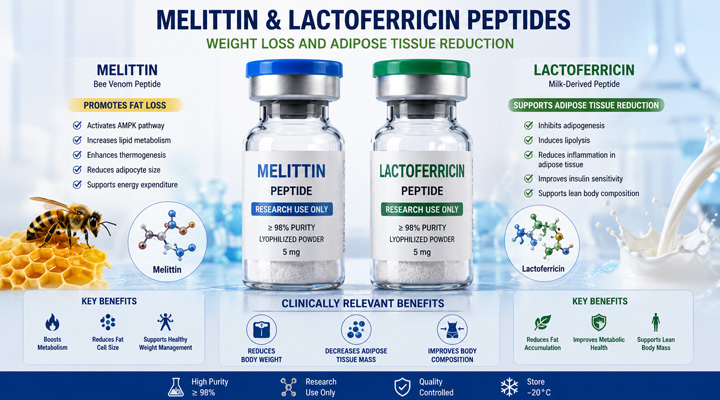
Melittin (Bee Venom Peptide)
Melittin is a 26-amino-acid peptide derived from bee venom, widely recognized for its potent membrane-disruptive properties.
Mechanism of Action
- Strong electrostatic interaction with cell membranes
- Insertion into lipid bilayers
- Formation of pores leading to rapid cell lysis
- Activation of apoptotic and necrotic pathways
Anti-Cancer Potential
- Demonstrates high cytolytic activity against a broad range of cancer cell lines, including breast, liver, and prostate cancer models
- Can induce rapid tumor cell death in vitro due to its membrane-targeting effects
Key Limitation
- Non-selective toxicity: melittin can also damage healthy mammalian cells, limiting its direct therapeutic use
Technological Solutions
To overcome toxicity, researchers have developed nano-delivery and targeting systems, such as:
- Liposomes
- Polymer nanoparticles
- Tumor-targeted conjugates
These approaches have been reported in experimental models to reduce systemic toxicity by approximately 60–80%, while preserving anti-tumor activity.
Lactoferricin (Derived from Milk Protein)
Lactoferricin is a bioactive peptide generated from the digestion of lactoferrin, a protein found in milk and secretory fluids.
Mechanism of Action
- Interaction with negatively charged cancer cell membranes
- Induction of membrane permeability changes
- Activation of apoptotic pathways
Anti-Cancer Activity
- Exhibits selective cytotoxicity toward tumor cells compared to normal cells
- Demonstrated inhibitory effects on:
- Colon cancer cell lines
- Breast cancer cell lines
- Leukemia models (in vitro studies)
Key Feature
Its relatively low toxicity profile compared to stronger lytic peptides makes it a promising candidate for further development in peptide-based oncology strategies.
Defensins
Defensins are naturally occurring cationic peptides of the innate immune system, found in humans and other organisms.
Types Relevant to Cancer Research
- α-defensins (primarily from neutrophils and Paneth cells)
- β-defensins (expressed in epithelial tissues)
Mechanism of Action
- Direct antimicrobial and membrane-disruptive activity
- Modulation of immune signaling pathways
- Interaction with tumor microenvironment components
Anti-Cancer Effects
- Human α-defensins have shown anti-proliferative effects in tumor cell models
- Associated with enhanced immune cell recruitment and activation in the tumor microenvironment
Biological Significance
Defensins bridge innate immunity and cancer suppression, suggesting a dual role in both direct tumor inhibition and immune system regulation.
Synthetic Peptides (RGD-Based Peptides)
RGD peptides are synthetic molecules containing the Arg–Gly–Asp (RGD) sequence, which mimics natural ligands of integrin receptors.
Primary Target
- Integrin αvβ3, highly expressed in:
- Tumor endothelial cells
- Angiogenic blood vessels
- Certain metastatic cancer cells
Mechanism of Action
- High-affinity binding to integrin receptors
- Inhibition of tumor angiogenesis
- Facilitation of targeted delivery of therapeutic agents
Applications in Oncology
RGD-based peptides are widely used in:
- Tumor imaging (molecular diagnostics)
- Targeted drug delivery systems
- Radiopharmaceutical development
Key Advantage
They provide a high degree of tumor specificity, improving both diagnostic accuracy and therapeutic targeting efficiency.
Summary of Evidence
| Peptide | Source | Main Mechanism | Key Benefit | Major Limitation |
|---|---|---|---|---|
| Melittin | Bee venom | Membrane lysis | Extremely potent cytotoxicity | High toxicity |
| Lactoferricin | Milk protein | Selective membrane disruption | Lower toxicity, tumor selectivity | Stability issues |
| Defensins | Human immune system | Immune modulation + cytotoxicity | Immune activation | Limited clinical translation |
| RGD peptides | Synthetic | Integrin targeting | High tumor specificity | Rapid degradation |
Comparative Table of Anti-Cancer Peptides
The following table summarizes key classes of anti-cancer peptides, highlighting their mechanisms of action, cancer targets, preclinical effectiveness, and major limitations. These data are primarily derived from in vitro and early in vivo experimental studies, which remain the foundation of peptide-based oncology research.
| Peptide Type | Mechanism of Action | Target Cancer Types | Reported Effect (Preclinical Studies) | Key Limitation |
|---|---|---|---|---|
| Melittin | Membrane lysis via pore formation and lipid bilayer disruption | Breast, liver, lung cancers | Up to ~90% tumor cell death in vitro under controlled conditions | High toxicity to normal cells; lack of selectivity without delivery systems |
| Lactoferricin | Induction of apoptosis through membrane interaction and mitochondrial stress | Colon, breast cancers | Approximately ~50–70% growth inhibition in cancer cell lines | Limited stability and rapid degradation in bloodstream |
| Defensins | Immune modulation and partial membrane disruption | Leukemia, melanoma | Reduction in tumor cell proliferation by ~40–60% in experimental models | Limited clinical translation and insufficient large-scale human trials |
| RGD peptides | Receptor-mediated targeting of integrin αvβ3 and related receptors | Solid tumors with high angiogenic activity | Enhanced drug delivery efficiency by ~2–5× compared to non-targeted systems | Susceptibility to enzymatic degradation and short in vivo half-life |
| Cell-Penetrating Peptides (CPPs) | Intracellular transport of therapeutic cargo (drugs, nucleic acids, proteins) | Broad spectrum of cancers | Increased intracellular delivery efficiency by ~3–10× in experimental systems | Risk of off-target uptake and non-specific tissue distribution |
Interpretation of Comparative Data
This comparison highlights several important trends in anti-cancer peptide research:
- Potency vs. safety trade-off: Highly cytotoxic peptides like melittin demonstrate strong tumor-killing ability but suffer from significant toxicity challenges.
- Selectivity improvements: Targeting strategies (e.g., RGD peptides) significantly enhance tumor specificity while reducing systemic exposure.
- Delivery limitations: Many peptides show strong in vitro efficacy but are limited in vivo due to rapid degradation, poor stability, or off-target effects.
- Emerging versatility of CPPs: Cell-penetrating peptides expand therapeutic possibilities by enabling intracellular delivery of otherwise impermeable drugs and genetic material.
Conclusion
Anti-cancer peptides (ACPs) represent one of the most dynamic and rapidly evolving areas in modern oncology research. Their unique biological properties—ranging from membrane disruption and apoptosis induction to immune modulation and intracellular targeting—position them as promising candidates for next-generation cancer therapeutics.
Across preclinical studies, peptides have consistently demonstrated the ability to:
- Selectively target tumor cells while minimizing damage to healthy tissues
- Interfere with multiple cancer-related signaling pathways simultaneously
- Enhance immune system recognition and elimination of malignant cells
- Serve as versatile platforms for drug delivery and molecular engineering
Despite these advantages, the transition from laboratory research to clinical application remains challenging. Key obstacles include enzymatic degradation, rapid renal clearance, and limited tumor-specific delivery. These factors explain why most peptide-based anti-cancer strategies are still in preclinical or early clinical development stages.
However, recent advances are steadily addressing these limitations. Innovations such as nanoparticle-based delivery systems, peptide engineering, AI-driven molecular design, and personalized genomics-based therapy are significantly improving the stability, specificity, and therapeutic potential of peptides.
Frequently Asked Questions: Peptides and Their Anti-Cancer Effects
-
What are anti-cancer peptides (ACPs)?
Anti-cancer peptides are short chains of amino acids that can selectively interact with cancer cells. They may kill tumor cells directly, block tumor growth signals, enhance immune responses, or deliver drugs into cancer cells.
-
How do peptides fight cancer?
Peptides act through several mechanisms, including:
* Disrupting cancer cell membranes
* Triggering apoptosis (programmed cell death)
* Blocking angiogenesis (tumor blood vessel formation)
* Activating immune cells such as T-cells and NK cells
* Delivering therapeutic drugs directly into tumor cells -
Are peptides more effective than chemotherapy?
Not necessarily. Peptides are not replacements for chemotherapy yet. However, they may offer advantages such as:
* Higher selectivity for cancer cells
* Lower systemic toxicity
* Reduced risk of drug resistance -
Are anti-cancer peptides used in clinical practice today?
Most anti-cancer peptides are still in:
* Preclinical research (laboratory and animal studies)
* Early-phase clinical trials (safety and initial efficacy testing) -
What are the main challenges of peptide-based cancer therapy?
Key challenges include:
* Rapid breakdown by enzymes in the blood
* Short circulation time (rapid kidney clearance)
* Difficulty reaching tumors in sufficient concentrations
* Potential off-target effects -
What are some well-known anti-cancer peptides?
Examples studied in research include:
* Melittin (bee venom peptide)
* Lactoferricin (derived from milk protein)
* Defensins (natural immune peptides)
* RGD peptides (synthetic tumor-targeting peptides)
* Cell-penetrating peptides (CPPs) for drug delivery -
Can peptides be used for personalized cancer treatment?
Yes, this is an emerging research area. Scientists are exploring how tumor genetic profiles can be used to design:
* Personalized peptide vaccines
* Target-specific binding peptides
* Individualized drug delivery systems -
What is the future of anti-cancer peptides?
Future developments include:
* Nanoparticle-enhanced peptide delivery
* AI-designed therapeutic peptides
* Combination therapies with immunotherapy and chemotherapy
* Precision oncology based on tumor genomics
Suggested Scientific Sources (for Citation Section of the Article)
The following scientific databases, peer-reviewed journals, and clinical registries are commonly used to support research on anti-cancer peptides (ACPs), including their mechanisms of action, preclinical efficacy, and translational progress into clinical trials.
PubMed Database
PubMed is one of the most comprehensive biomedical literature databases, maintained by the U.S. National Library of Medicine. It includes:
- Peer-reviewed studies on anti-cancer peptides
- Mechanistic research on apoptosis, membrane disruption, and immune modulation
- Clinical trial reports and meta-analyses
- Reviews on peptide-based drug development
Relevance to ACP research:
PubMed provides access to thousands of studies on peptide cytotoxicity, tumor targeting, and combination therapies with chemotherapy or immunotherapy.
Antimicrobial Peptide Database (APD3)
The APD3 database is a specialized resource for cataloging bioactive peptides, including those with anti-cancer properties.
Key features:
- Over 3,000–4,000 annotated antimicrobial and anticancer peptides
- Sequence information and structural classification
- Functional activity data (including cytotoxicity and membrane interaction)
- Physicochemical property analysis
Relevance to oncology:
Many antimicrobial peptides listed in APD3 also demonstrate selective anticancer activity, particularly through membrane disruption mechanisms.
ClinicalTrials.gov – Peptide Oncology Trials
ClinicalTrials.gov is the primary global registry for ongoing and completed clinical studies.
Relevance to peptide-based cancer therapy:
- Early-phase trials of peptide vaccines
- Investigational studies of peptide-drug conjugates
- Evaluation of peptide-based immunotherapies
- Combination therapies involving peptides and checkpoint inhibitors
Importance:
It provides real-world insight into the clinical translation status of peptide therapeutics, including safety, dosing, and preliminary efficacy outcomes.